With environmental leadership floundering at the very top of our “greenest government ever”, we thought it would be a good exercise to look at who has brought about some real green leadership through their work and vision. Our Top 10 Environmental Leaders are as follows:
1. Tim Smit – founder of the Eden Project, which has become synonymous with raising awareness of green issues and inspiring young people
About 13 million visitors have come to the Eden Project, which cost £141m to build and is estimated to have generated £1.1bn for the West Country in extra tourist spending. Built to be as energy self sufficient as possible, the attraction provides environmental projects as well as allowing visitors to explore ideas and innovations that can be implemented to ensure we ‘tread lighter on the planet’.
Talking about the launch of The Eden Project “I thought that environmentalists were usually so boring, I wanted to do something that was so theatrical that people would have to suspend cynicism.”
2. Harriet Lamb – Fairtrade opened up the lives of producers on the other side of the world
Her team have helped build commercial partnerships that have resulted in sales growing from £30 million in 2001 to £1.32bn in 2011. This means that More than 7 million people in Africa, Asia and Latin America benefit from Fairtrade – farmers, farm workers, and their families. Fairtade this year launched a campaign requesting that the public sign a petition for smallholder farmers to get a better deal to hopefully spark debate about the matter at the summer G8 meeting. They achieved over 15,000 supporters.
“Times are tough for people in the UK right now. But across the developing world, times are desperate for smallholders, caught between rising food and fuel prices and a credit crunch that sees orders falling and access to loans becoming harder than ever”
3. Yvon Chouinard – founder of Patagonia who ‘walks the talk’
Just announced that his company will be launching an in-house venture fund named $20 million & Change for startups that try to make a positive impact in five areas: clothing, food, water, energy, and waste. Patagonie itself has challenged the status quo of retail
“…most of the damage we cause to the planet is the result of our own ignorance.”
4. David Attenborough – for an 87 year old, imagine if he was your granddad?
The famous face, or rather voice, of nature surely deserves his place amongst our green leaders. Playing a pivotal role in the regular depiction of nature on our TV screens, providing a window to the vast world we live in and the need to treasure it – his role in bringing to light the need for environmental action across the world has shown that he has been equally important outside of the small box in which we see him.
“We are a plague on the Earth…It’s not just climate change; it’s sheer space, places to grow food for this enormous horde. Either we limit our population growth or the natural world will do it for us”
5. Alistair McGowan – brought many faces to the environmental movement
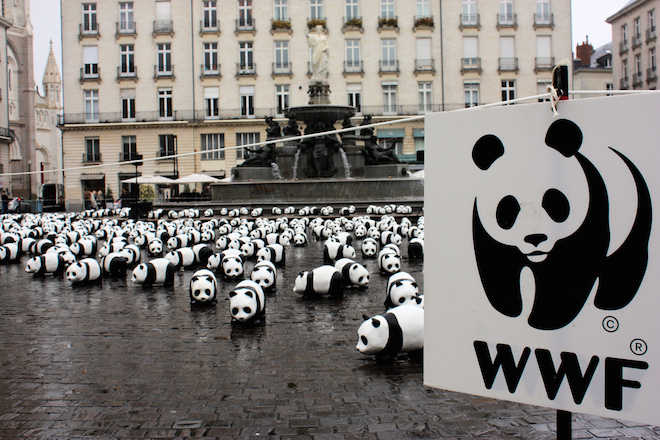
Well-known ambassador of WWF, patron of charity Trees for Cities and 4-time host of the British Environment and Media Awards as well as many other environmental awards. Using his celebrity status to highlight issues in the environment. His involvement in the environment includes collaboratively purchasing a strip of land to prevent the development of a third runway at Heathrow airport, publicly backing Solar Power and developing an old coach house into an eco-friendly residential home.
On battling for the environment – “It’s the drip-drip effect of lots of small actions by individuals that has created the problem. And lots of small actions in reverse can help undo the problem.”
Other fantastic leaders who narrowly missed out on the top 5:
6. Andy Wood – MD of Adnams, low carbon brewery leading light in how to do best by community / environment
7. Kevin McCloud – eco-design champion in the design / built environment)
8. Paul Poleman – 5 levers for change at Unilver
9. Chris Packham – host of SpringWatch and exe CEO of BATS
10. Prince Charles – has the ability to change things and scale-up Duchy of Cornwall etc
These environmental leaders span many different professions from retail to the brewery trade and all are:
Governments take note – each of these leaders saw the need for change and acted on this.
Who will be the next environmental leaders of the future?
More >Posted 22 May 2013 | No comments
I returned to Laban yesterday to see a project I worked on ten years ago – see original outline here. Rob Leslie-Carter (Director at Arup was the Project manager on the building), arranged the reunion tour for all who worked on the project, I’ve used his words as our ‘Guest Blogger’.
The Laban building always was one for keeping you hooked. I remember Harry Gugger saying that walking around the building was like wandering along a beach staring out at the ocean – always changing, never the same experience, endless. This afternoon was new and old in equal measure for me.
Old: The building is timeless and still looking as good as it did when it opened ten years ago. Student proof, well designed and detailed – the place is a testament to Marion North’s experience and determination, balanced by Anthony Bowne’s understanding and endless trust in good design, and the depth and professionalism of the people that make-up the Laban organisation. You just can’t turn something like the Laban building from a crazy sounding vision to reality without a whole bunch of people getting behind it through good times and tough times. Revisiting the place brings some things back like it was yesterday. Things that were never quite right are still not quite right – some broken panes of glass, rooms that are too hot or too cold, water features that never worked, moss that never grew – they are a reminder that finishing a project is just the beginning of the users living with, relying on and adapting to a building for the next 100 years or so. It’s also the reality of delivering such an innovative building for £14M when it looks and feels five times the price. Some of the defining features of the building – the colour scheme, the polycarbonate cladding, Michael Craig Martin’s mural, the bendywood handrails, the landscape, the bush hammered ‘black like molasses’ spiral stairs and walls, the exposed services and concrete, the theatre fly-towers and interiors, the green roof – were all midstream improvisations and adaptations to meet the budget without compromising quality, durability, and the design teams’ ethos of always combining form with function. It’s not perfect, but every beautiful square inch has a purpose. It is a building without a single gimmick.
New: Some people there today hadn’t seen the finished Laban building at all even though they played a major part in making it happen. Like many of the people there today, I hadn’t seen Laban for the last ten years. I’d never seen the garden with grass, and seeing 50 or so students outside this afternoon proudly rehearsing on top of the beautifully sculpted landscape was surreal and totally joyous. Anthony Bowne mentioned that the first set of students that knew Laurie Grove and moved to the Laban building felt intimidated by its transparency and openness, and that only the new first year students truly embraced the idea. Performing in the open is now clearly part of the Laban experience for students, and it was an absolute pleasure to see them obliviously parading what they do best.
I’d forgotten how mesmerising the setting is. A multi-coloured plastic box in the heart of an industrial wasteland, connected through huge internal streets and gigantic windows to St Pauls Church and New Cross in one direction, Greenwich and Trinity College in the other, and the ever ‘charismatic’ Deptford Creek shimmering along one side. Deptford is definitely a location for the more determined traveller, so the Laban building will always retain an exciting element of being a surprise gem. If the Laban building was on the London tourist trail it would be truly world famous, although this sounds odd recognising it is a Stirling Prize winner and named five years ago as Britain’s best building.
Mostly, I’d forgotten what a vibrant and progressive organisation Laban is. The theatre is a fantastic cigar box of a venue but it’s the crew that make it the place dance companies want to come. The amazing demonstration from Emma Redding in the Dance Science Lab reminded me how cutting edge Laban is and how little about it I know. Chatting to Veronica Jobbins about the 1,600 kids that come through the building every week put into perspective the breadth of Laban’s reach into the community – Laban is walking the talk and some.
More >Posted 26 April 2013 | No comments
I am a big fan of schools that take their Science Week or Green Week seriously. As a Trustee of the Marine Conservation Society, I’ve just been into the excellent Lee Common Church School and spoken to them about the marine environment.

I talked to the whole school (well it is only wee with 48 children from reception to year two) about the challenges facing our seas. We also spoke to a slightly bigger group at The Beacon of 450 boys. I am pleased to say that £800 was donated and Lee Common adopted a turtle through MCS.
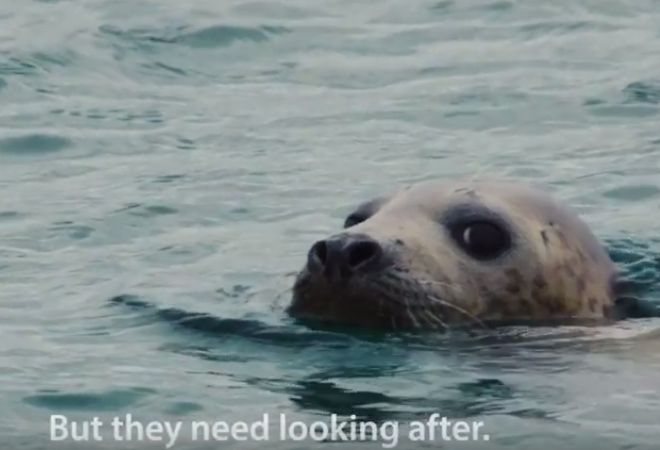
They asked great questions and were amazed by the scale of things like the Basking Shark (which grows to an amazing 11 metres in length and yet only eats the smallest of things in the sea). We looked at the effects of pollution – and how one lucky seal had a happy ending, which isn’t always the case. Five out of the seven global turtle species come to the UK shores (including the Leatherback, Green, Loggerhead, Hawksbill and Kemp’s Ridley) and often confuse their favourite tea of jellyfish with plastic carrier bags. We saw how similar plastic bags look to jellyfish and the other problems caused by the massive rise in sea litter.
We looked at the abundant sealife with so many surprises including the Cuckoo Wrasse, which changes from a female to a male, causing quite a stir. And the biggest ever Leatherback washed up in Wales, at ten times the weight of an adult.
We looked at some of the common things we see on our beaches and how it’s good to know a few of these including the seaweed which looks like Lettuce, as we are never further than 70 miles from the sea.
We also considered what inspires us about nature. And how a passionate interest can turn into a lifelong obsession (or even a career, in many cases).
We discussed the importance of well-managed fisheries. With over 85% of fish stocks at their limits, we looked at the fish which should be avoided. And finally we discussed the role of government in protecting our seas – of which only 0.006% are currently protected. And the Marine Conservation Society, who are pushing government to recognise 127 Marine Protected Zones (which would make up 27% of our seas). But this mean old government is only considering 40 of the zones.
I hope our school Science Week and Green Week children go on to be more inspired future leaders and do a better job of protecting our seas.
More >Posted 23 April 2013 | No comments
Seb is humble as humble can be. He is the Ronnie Corbett of sport, telling the best stories about the 2012 Olympics, which he led from start to finish. I’m probably not alone in saying I would have been happy to hear him speak all night at last night’s Marketing Society Annual Conference where he regaled us for an hour. He was joined on stage by the equally affable triple jumper, Jonathan Edwards, whose 18m world record for triple jump record still remains unbeaten.

Sitting listening on the back row, with hundreds of people in front of me in the wonderful Royal College of General Practitioners Theatre, I realise in my view that Seb Coe embodies everything that makes up a truly modern leader.
Humour and proportionality
He balances laughter and humour, in the face of impossible tasks, in this case of reaching the games finish line at the start of their seven year journey.
It was pleasure to witness the lively banter between Seb and Jonathan, who obviously hold each other in high esteem. He quotes former PM from the 1900s Arthur Balfour “Nothing matters very much and few things matter at all” as a reminder to keep things in perspective. He said the delivery was way more funny than the BBC’s ‘2012’ series. The epilepsy causing logo film, the cabbies complaining about traffic, the lost bus, the red lights turned to green (yes really), and the ticketing.
Team
He understands the importance of his team. Having the best team – but not the obvious choices, no boring Olympic lifers, but people at the top of their game. Seb has built a loyal and strong team around him. I saw the way his face lit up when he greeted David Magliano, who was Director of Marketing for London 2012 and was pivotal in delivering the ‘why’ we’re doing the Games. Seb mentioned David more than three times in his speech.
He said his father was his biggest most inspiring character in his life, which is something given all of the sporting heroes Seb could have chosen. Proof that family is his main frame of reference – ‘his other team’.
I was intrigued by this lone runner – trained by his father (often himself using new and unusual techniques) – who was suddenly in a ‘team sport’ with hundreds of people around him, and seemingly enjoying every minute.
He heaped praise and glory on the close-knit team that made the games happen. He holds in disdain the ‘Armada of instant experts’ who turned up and the mass “glorification of the uninvolved” who mostly didn’t want the games in the first place.
The (K)night’s lecture was about much more than about sport. In fact sport wasn’t mentioned much at all. It was about a way of doing things. Not Seb’s way but his team’s way.
Vision
Their vision was the bedrock they returned to when making all their decisions.
For a Grantham born and bred man who calls a spade a spade, he didn’t mince his words about where he sees logos and all that stuff. But clearly he does see value in brand and comms – which was of great interest.
Hard work
Seb finally slept a full night’s sleep on 10 September 2012 without waking up in the morning worrying about ‘winning the bid’ or delivering the games. This man creates loyalty and inspires those around him to go that bit further – to work day and night without questioning. It is no surprise that he was instrumental in delivering the Games maker programme, which drew in medics and cabbies.
Seb is somebody who has the grace and strength to recognise his own shortcomings, to not to take himself too seriously, and at the same time to win over the many serious heavy-weight partners (and the challenges that were thrown at him day and night).
I’m sure he was wasted as an MP. There were a few cheap calls for him to run for PM. That’s wrong in my view. He is a people person. At his best delivering some of the world’s biggest themes. Here’s to his role in bringing the games to Africa, one of his stated dreams. Here’s to him continuing to make health and sport a part of everyone’s life. Normalising disability. And here’s to him leading when it comes to supporting low-carbon planet healthy games. Seb is a hero.
More >Posted 11 April 2013 | No comments
Social media is perfect for the needs of charities and not-for-profit organisations. Facebook and Twitter have over 1.4 billion members – it’s a cheap, targeted, and an engaging way to reach and influence our audiences instantly.
We’re obsessed by online – apparently the UK spends more than any other country online (so we heard at Media Trust’s GoMobile Conference last week). And mobile is the next big thing. But how do you harness this to influence people and generate real change? We’ve been looking at how the best charity campaigns do just this.
80% of charities are actively using social media as part of their campaigns. There has also been a doubling of supporters on key UK charities social media channels in the past year alone.
We have listed some of the best uses of social media in the charity / environmental sector:
Fairtrade – battle for the farmers
More than 500 million of the world’s farmers produce 70 per cent of the world’s food but receive an average of only 3 per cent of the retail prices charged by supermarkets. Fairtrade’s campaign to get a better deal for the smallholder farmers highlighted the issue at this year’s G8 meeting.
Why it’s on the list
The campaign signed-up just under 10,000 people as a result of a brilliant, shareable campaign video and protest idea backed by some solid celebrity faces (Jonathan Ross included). The petition will be sent to David Cameron on World Fair Trade Day in May before the G8 meeting the following month.
Invisible Children – KONY campaign
The KONY 2012 campaign started as an experiment. Could an online video make an obscure war criminal famous? And if he were famous, would the world work together to stop him? Or would it let him remain at large?
Why it’s on the list
The fastest growing viral video of all time, with 100 million YouTube views in 6 days, 3.7 million people pledging their support raising over $12 million and becoming the “most liked” non-profit on Facebook with 3.1 million likes. KONY was the #9 most searched person on Google this year.
Avaaz.org – online petition platform
Launched in January 2007, Avaaz.org is a global online campaigning organisation that brings people-powered politics to international decision-making.
Why it’s on the list
Avaaz has grown to more than 10 million members worldwide.
It provides an online, low-cost process in which people all over the world can sign-up to try and make a difference – right injustices, save people’s lives, campaign for fairness – anything.
Breast Cancer Awareness UK – I like it on
Mysterious updates such as, ‘I Like It On’ followed by ‘the floor’, ‘the bed’, etc., started appearing on females’ Facebook social profiles. Women were actually talking about where they like to leave their handbags and this created curiosity and interest to find out about Breast Cancer Awareness UK.
Why it’s on the list
Clever, inexpensive way to create a buzz across Facebook and Twitter by leaving the work up to the audience themselves!
Movember – supporters of Prostate Cancer UK
Movember – the famous yearly campaign started back in 2003 from humble beginnings in Melbourne, Australia. Since then it has skyrocketed and throughout the month of November – you would struggle not to see any supporters rocking the facial hair.
Why it’s on the list
Last year, through Movember, Prostate Cancer UK (the main UK beneficiary of the campaign) managed to raise an amazing £26 Million.
Social media is a way for brands to interact with many people in a targeted away – often with instant results. As these examples have show, if the content is brilliant and intriguing, you have a good chance of people sharing it. A focused campaign, with brave responsive creative, will stand any charity in good stead.
We will be discussing 3 of these case studies in our next event as our successful Shortcuts seminar series continues on 3 May.
For more information, or to book your place – View event invite now!
More >Posted 4 April 2013 | No comments
The Shard is a very very high building. You forget this when the lift whisks you up to the 28th floor in a few seconds, not even a third of the way up Europe’s tallest building. Irvine Sellar (the entrepreneur behind the Shard), Ronan Dunne (CEO of O2) and Benny Higgins (CEO of Tesco Bank) gave a very frank overview of their thoughts on leadership – interviewed by the excellent Suki Thompson on the launch of Oystercatcher’s new report, ‘Tough at the top’. Perhaps the location on the 28th floor was a physical reminder of how tough it really is getting to the top (there are 92-floors in this monolith).

What did we learn about leadership – in order of importance it is about:
1. Building trust. Higgins, behind Tesco Bank, said that having ‘the courage to lean into the truth to create enduring trust’ as well as anchoring the company’s work in the truth, was essential. The Tesco mothership has been redoubling it’s leaning efforts over the last fortnight.
2. Having the courage – which few do – to pick the very best team (better than you) as well as having the courage to say when things are not going so well
3. Being a great storyteller in a way that inspires those around you to follow
4. Having the ability to make the right decisions and to learn quickly from making the wrong ones.
5. The ability to get things done. Irvine thinks entrepreneurs don’t necessarily fit the bill to be good CEOs – they are much better at start-ups and handing over to guys like Ronan and Benny to finish.
6. Conducting the team, and making everyone else’s success shine
In this brief interview, the conclusion was that marketing folk – with all their passion – could lead at the top of an organisation, but sometimes found it difficult to let go of their specialism.
When it got to what would be on each of their epitaphs – I crossed my fingers and hoped that the Arup’s ‘wobbly bridge’ bloke wasn’t the PM on The Shard! Ronan said he wanted to leave a positive legacy. I loved O2’s ambition of getting the UK’s one million youth back into work (is that really in O2′s business plan?). I wanted to ask Irvine how it felt to build the tallest building in Europe and yet forget to put bike racks in anywhere nearby – it took me 15 minutes to park my bike – but at least from the 28th I could see where I park it on the Southbank.
A few interesting quips and anecdotes from our CEOs but if you want to see truly inspirational leadership, look at interviews with Patagonia founder, Yvon Chouinard or Tim Smit (founder of the Eden Project) – they are real game changers.
More >Posted 13 March 2013 | 2 comments
As the first chilly month of 2013 draws to a close, we wanted to present our list of what we consider to be the best standout marketing from charities in 2012. We have selected six campaigns, which we think are bold and different in what has been a challenging year. Brave souls out there are doing the best for their charity brands and we applaud you all.
1. Save The Arctic
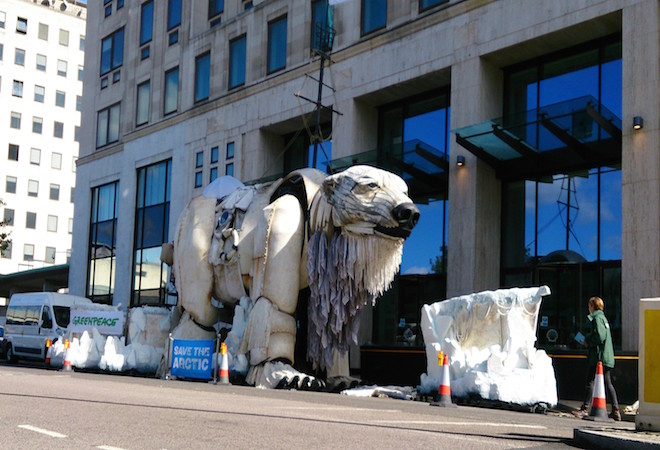
Save the Arctic, headed by Greenpeace, is a campaign to save the Arctic from industrial fishing and offshore drilling for oil. The campaign film, Vicious Circle is narrated by John Hurt and has driven an impressive 2.4 million people to sign the petition, to have the Arctic region declared a sanctuary by the United Nations.
2. Plan UK recognition
Plan UK’s Because I am a Girl campaign which highlights the plight of the world’s poorest girls, used an interactive ad on a bus stop in Oxford Street. The advert used facial recognition so men and boys were denied the choice to view the full content, to highlight the fact that women and girls across the world are denied choices and opportunities on a daily basis.
3. St John Ambulance Helpless
A TV ad which had minimal media spend went viral, showing a young man surviving cancer, only to choke on some food whilst eating at a mate’s BBQ. Highlighting that up to 140,000 people die each year from choking – that’s as many as die from cancer. As a direct result of the ad, thirty thousand downloaded the free First Aid app.

4. Compassion in World Farming Front Page
A large proportion of French farmers were expected not to meet the sow stall ban deadline, meaning thousands of sows would continue suffering illegally in sow stalls. CIWF tailored the ‘front page’ of a newspaper for supporters to complete and send to the French Ambassador.
5. Charity: water
Charity: water started three years ago with one man in the States giving up his birthday, spending it instead building wells in Africa. Since then the charity has grown using clever and arresting images, word of mouth, advertising, interesting events and exhibitions and social media. Their fundraising efforts involving celebrities such as Will Smith have been second to none.

6. Oxfam Africa
I love the fact that these print ads hit the press at the same time as Sir David Attenborough’s landmark series Africa. A positive repositioning of how we see Africa as a country of bounty and great natural riches.
These are just some of things that inspired us from last year. We will be using a selection of these case studies in our first ‘Shortcuts’ seminar series on Friday 1st March 2013. ‘Shorcuts’ is our free seminar series aimed at inspiring marketing managers to deliver even greater marketing in 2013.
More >Posted 29 January 2013 | 8 comments
It’s been a tough year for the environment, though 2012 could turn out to be a landmark year for the planet. We’ve pulled out six things that could and should inspire future generations to help the planet. 
1. Olympic park sustainability
Priority was delivering low-carbon games including the buildings and transport, helped by the great work of Simon Lewis of WWF and Bio-Regional who encouraged the use of a carbon footprinting tool. Recycled materials were used for buildings and the park itself was an oasis of over 120,000 plants and waterways.
2. Eco-friendly cars hit new high
Hybrid cars are starting to be produced by the majority of car manufacturers. The numbers of alternative fuelled vehicles hitting the roads in the UK reached a record high during 2012. According to the latest figures, registrations of hybrid vehicles in the UK rose 9.4% achieving 1.4% market share, a new high.
3. Weather extremes
The wettest, the driest, the coldest … our weather in 2012 showed what changes could be coming and for many the concern around global warming took on more immediacy than ever before.
4. Felix’s big Earth leap
The real eye opener on his 14th October descent was seeing the world from afar, reminding us how vulnerable and tiny we are. Felix’s new world records whizzed by in the blink of an eye – skydiving an estimated 24 miles and reaching a speed of 834 mph, becoming the first person to break the sound barrier without power.
5. Rediscovering species like the Mediterranean Oil Beetle
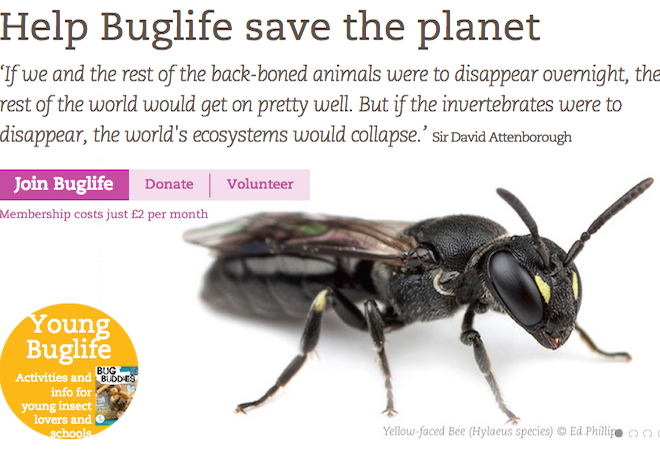
A supposedly extinct oil beetle, not seen for 100 years, was (re) discovered just before the New Year, which brings the total number of oil beetle species in the UK to five. A fine moment. In the words of Sir David Attenborough ‘if the invertebrates were to disappear overnight, the world’s ecosytems would collapse’.
6. Grow your own produce!
With the recession came many changes to Britons’ lifestyles but the rise in homegrown fresh produce is having quite a positive impact. Encouraged by celeb chefs, such as Jamie Oliver and higher supermarket prices, an amazing 150,000 people are on the allotment waiting lists around the country, it looks like a green trend on the up.
These are just some of things that inspired us from last year. We would welcome your comments and input. Green Banana Marketing believes that we all play our part in building a smarter, fairer and greener future in 2013.
More >Posted 9 January 2013 | 2 comments
Starbucks could have dealt much better with the sticky situation they’ve found themselves in over their underpaid tax. The coffee chain in future needs to deal with problems a whole lot smarter and here’s how:
1. Be open
Starbucks could have drawn the sting by asking people in-store what they should do about their tax situation, having made the wrong decision in the first place.
Openly talking ab
out it with their customers as soon as the problem came to light would have saved a reputation re-think, which is now needed to address some of the disappointment from their customers.
Instead, rather belatedly, they have decided to pay more tax than normal in the next two years. Too late for some people; on Twitter the anger expressed, “I’ve paid how much to starbucks over the years? And not a penny since 2009 has gone to hmrc? Sigh turning to anger”, has turned #boycottstarbucks in to a trend.
2.Change your plans
Why not ‘pull’ some of the planned new store openings in towns and villages least welcoming. Make this a money saving measure, saving for your tax bill like most companies.
3.Fix it
Speed and transparency often resolves many of the issues when reputation hangs in the balance. It would have been better to openly accept the situation and pay the taxes that were owed immediately.
4. Give and you shall receive
Often when an individual or company are found to fall short and subsequently right the situation, they are obliged to make a charitable donation. Why not make a huge donation to Shelter or Crisis at Christmas. Make it part of your on-going Shared Planet.
5. Make-up for it
Think about ways moving forward to be a more agreeable, engaging and listening organisation, which benefits the UK market (and then people might offset the more brash American image you sometimes have).
Green Banana Marketing believes in organisations that are smarter, fairer and greener. We strongly encourage Starbucks to make a difference for the right reason with its business in the UK and the rest of the world.
More >Posted 11 December 2012 | 6 comments